AutoHedge: A Review of an Autonomous AI Hedge Fund Based on Swarm Intelligence

In recent years, we have seen a gradual shift from traditional algorithmic trading, based on fixed rules and mathematical models, toward autonomous AI agents that can analyze context, news, and unstructured data.
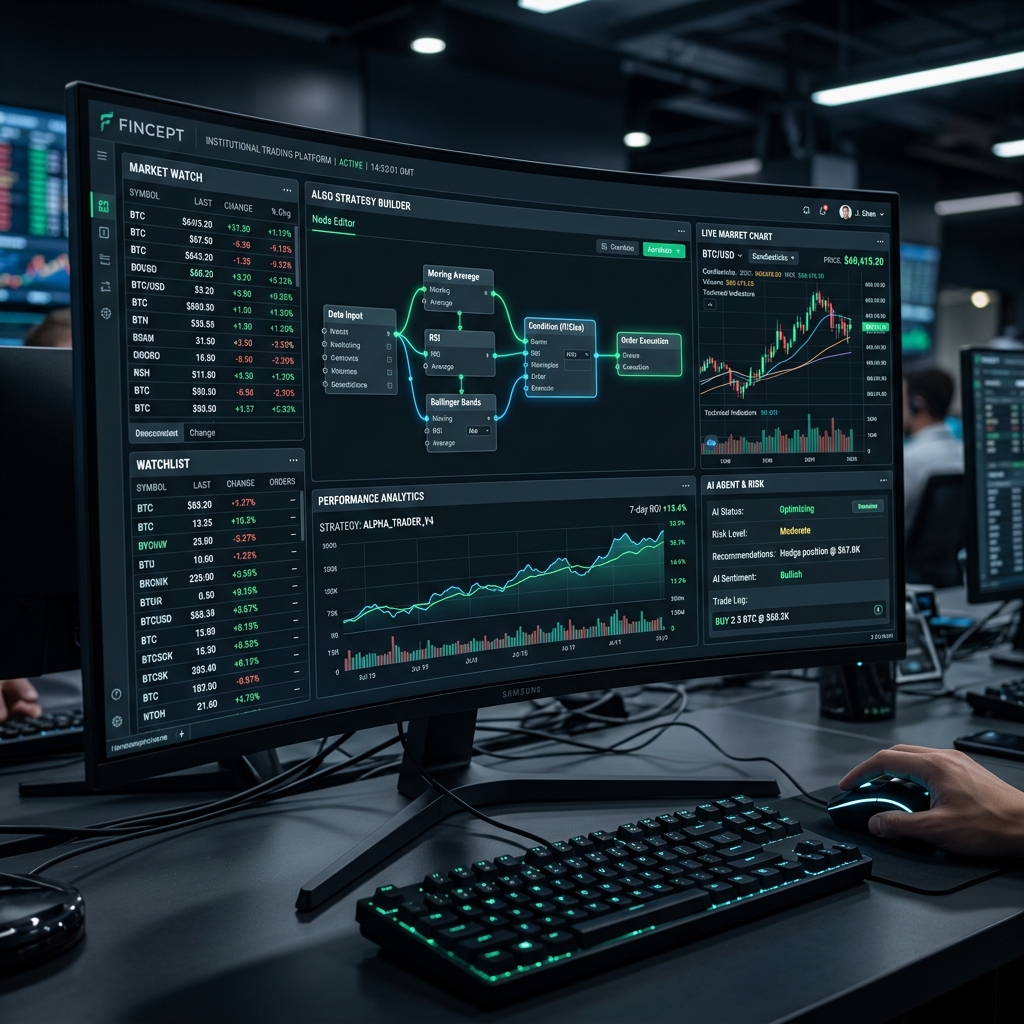
One prominent open-source project in this area is AutoHedge by The Swarm Corporation. It is an enterprise-grade system that combines swarm intelligence with specialized AI agents to cover the full trading cycle: from market analysis to risk assessment and order execution.
Let's look under the hood at how this AI hedge fund works and why multi-agent architecture is becoming a new standard.
Architecture: Divide and Conquer
Rather than relying on one enormous LLM (Large Language Model) to analyze news, calculate volatility, and submit orders all at once—which often leads to hallucinations and a depleted account—AutoHedge uses a strict hierarchy of specialized agents.
The pipeline can be represented by this routing sequence:
Director Agent ➔ Quant Agent ➔ Risk Manager ➔ Execution Agent
1. Director Agent (Trading Director)

This is the system's brain and coordinator. It generates high-level trading theses and manages the overall strategy. The Director analyzes the macroeconomic context and decides which coin or stock merits consideration, then passes the task to specialized agents. It also works with the Sentiment Agent, which gathers news sentiment using search tools (Exa Search).
2. Quant Agent (Quantitative Analyst)

After receiving a thesis from the Director, this agent performs rigorous quantitative and technical analysis. It produces structured JSON with metrics including:
technical_score(from 0 to 1)volume_scoretrend_strengthprobability_score- Key levels: support, resistance, and pivot points.
The Quant Agent gets its data through integrations with Yahoo Finance, Polygon API, and Jupiter (for on-chain data).
3. Risk Manager

This is a crucial component for any fund's survival. Before an order reaches an exchange, it passes through the Risk Manager. The agent receives the asset, the initial thesis, and the quantitative analysis results. Its job is to provide:
- A recommended position size.
- Maximum drawdown risk.
- An assessment of market risk.
- An overall risk score.
4. Execution Agent

This is the final link in the chain. Once the Risk Manager gives its approval, the Execution Agent creates a specific trading order. It determines:
- The order type (Market / Limit).
- The exact asset quantity.
- The entry price.
- Stop Loss (SL) and Take Profit (TP).
- Time in force (how long the order remains active).
The system is designed to minimize human intervention: one agent's output becomes the next agent's strictly validated input.
Under the Hood: The Swarms Framework
AutoHedge is built on Swarms, a framework optimized for multi-agent systems. In the codebase (workers.py), each agent is initialized with a clear system_prompt and a fixed model (for example, GPT-4o for analysis and GPT-4.1 for more complex reasoning chains).
A defining feature is its strict Risk-First Design: the architecture forces every decision through the Risk Manager. If the Risk Manager rejects it because of a high overall risk score, the Execution Agent receives no instruction to generate an order.
Infrastructure and Exchange Support
At present, AutoHedge focuses on DeFi:
- Solana (full support): Integration with the Jupiter API aggregator enables fully autonomous on-chain trading, finding the best prices and executing swaps directly from a wallet whose private key is specified in
.env. - Coinbase (in development): Support for conventional centralized exchanges is expected soon.
Launching Your Own AI Hedge Fund
Launching the system is surprisingly simple. You need an OpenAI API key (the system natively supports OpenRouter and other OpenAI-compatible APIs through OPENAI_BASE_URL), a Jupiter API key for data, and the trading wallet's private key:
pip install -U autohedge

OPENAI_BASE_URL="https://openrouter.ai/api/v1"
OPENAI_API_KEY="sk-or-v1-..."
JUPITER_API_KEY=...
WALLET_PRIVATE_KEY=...

autohedge
(To use specific models from OpenRouter, such as Claude 3.5, simply change model_name in workers.py.)
The Future of Autonomous Trading
AutoHedge illustrates where algorithmic trading is headed. Moving from rigid if-else scripts to ensembles of AI agents allows a system to adapt to changing markets.
Instead of rewriting code when the market regime changes (bull/bear/crab), you can give the Director new instructions (prompts), while the Quant Agent looks for new technical patterns.
Although the project is still under active development (and should be used cautiously with substantial real capital), its open MIT license makes it a useful architectural foundation for anyone who wants to build a tireless "iron" trader that never sleeps and strictly follows risk management rules.
Authors
Trading-systems engineer
Trading-systems engineer building bots since 2017: cross-exchange arbitrage (connected up to 30 venues), cointegration-based pairs arbitrage across spot and futures, scalping, news and sentiment-driven strategies, trend algorithms, and portfolio management and balancing algorithms. Also builds sub-millisecond order execution, big-data warehouses, backtesting engines, AI agents, and trading interfaces (incl. open-source profitmaker.cc). Stack: JS/TS, Python, Rust/Zig/Go, DevOps, backend, frontend, architecture.
Read More

+702% on SOL. Where Is Jev in This Backtest?

The Kelly Criterion for Strategies: How to Size Positions and Allocate Capital